The agents who look back at 2026 as a turning point in their career won't be the ones who knew the most about the market.
They'll be the ones who spotted the right signals early enough to act on them.
Five trends are reshaping how real estate agents operate right now. Not next year. Not in theory. Today. Each one represents a shift in buyer behaviour, market structure or competitive landscape that changes what the best agents are doing differently. Here's what they are and what they mean for you specifically.
1. The buyer who's been sitting on the sidelines is finally moving
The housing market has been essentially flat since 2023. That prolonged stagnation built up a significant pool of sidelined demand, buyers who wanted to move but couldn't justify the rates, the prices, or the uncertainty.
That pool is beginning to drain. Inventory is projected to increase 8.9% in 2026, giving buyers more options and creating more transaction opportunities for agents than the past two years combined. The buyers coming back aren't impulsive.
They're calculated. They've been watching for two years. They move fast when they decide, and they move with agents they already trust. MADnext
If you haven't been in front of your database consistently for the past eighteen months, you are not the agent they call first. The window to fix that is now, not when they're already under offer with someone else.
2. AI is not replacing agents. It's separating them.
76% of agents anticipate more competition from technology platforms and AI in 2026. Most are worried about it. The ones building pipeline aren't. Whizzy Studios
The shift happening is not that AI is doing agents' jobs. It's that AI is making the gap between a prepared agent and an unprepared one wider and faster. Leading players are embedding AI across deal sourcing, underwriting and portfolio strategy — using advanced analytics to identify opportunities earlier and assess risk more precisely. At the agent level, that translates to: who in your database is statistically most likely to move in the next 90 days? The agents using signal-based tools to answer that question are spending less on leads and closing more. PubMed Central
The agents ignoring this aren't losing to AI. They're losing to other agents who are using it.
3. The generational wealth transfer is creating a new class of buyer
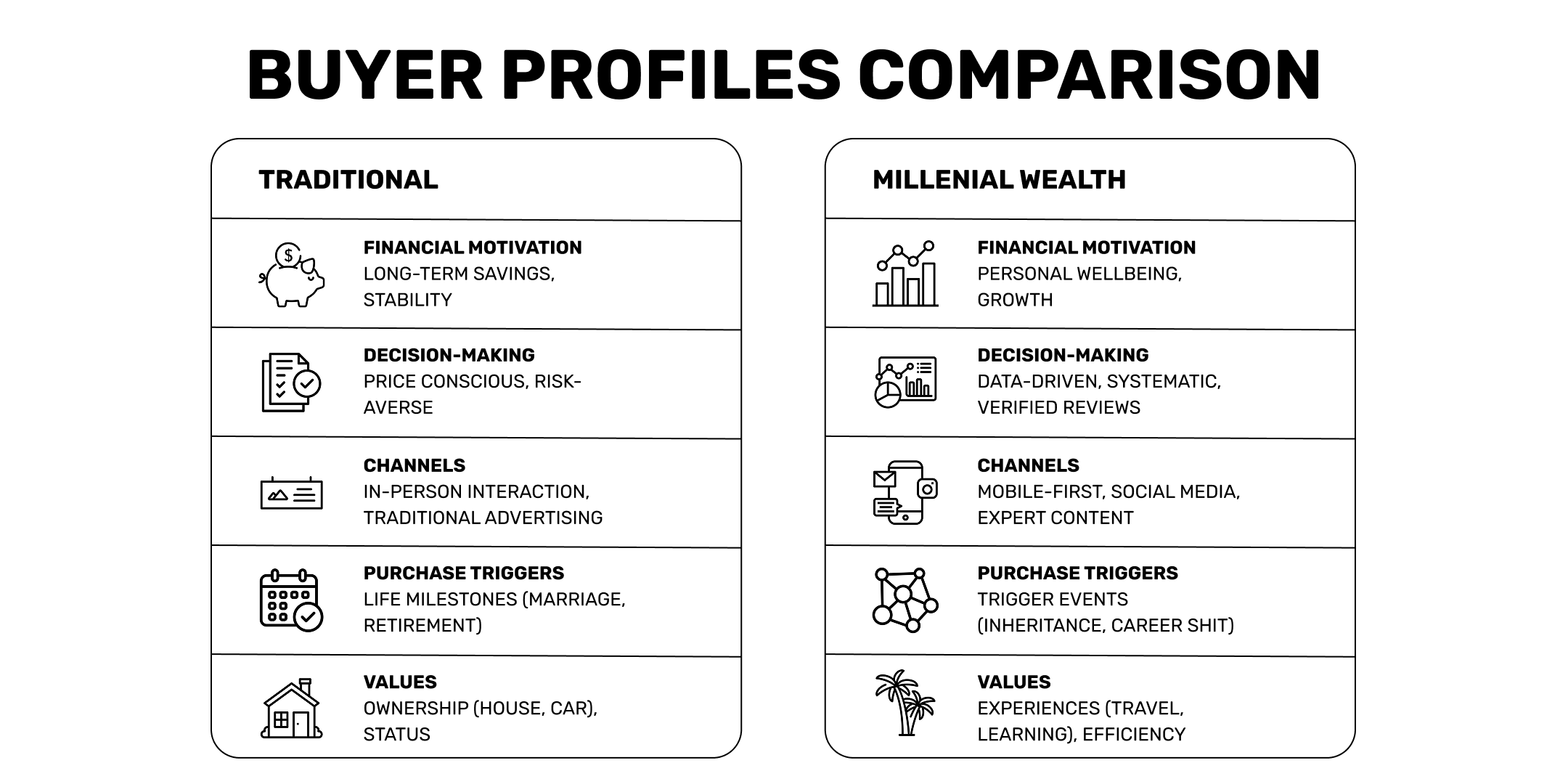
Trillions in real estate wealth are moving to Gen X and Millennials — producing a new class of buyers seeking properties that serve as long-term vehicles for family wealth preservation. The Agency's 2026 Mid-Year Red Paper identifies this as one of the most consequential shifts in buyer behaviour in recent memory. Harvard Business Review
This matters for every agent, not just those working luxury. The millennial buyer entering the market now is older, more financially sophisticated, and more research-driven than any previous generation of first-time buyers. They do not respond to the same pitch. They respond to agents who speak their language — data, lifestyle alignment, long-term value, not urgency tactics and pressure closes.
4. Inventory is rising but it's not evenly distributed
New home permits are up for the fourth consecutive month, signalling that builders are cautiously bullish, but gains are not evenly distributed across markets. Some areas will see meaningful new inventory. Others will remain supply-constrained well into 2027. Iads
For agents, this creates two completely different competitive environments depending on your market. In supply-constrained markets, the agent with the best seller relationships wins, listings are scarce and the network matters above everything else. In markets where inventory is rising, pricing discipline becomes the defining skill, overpriced listings sit, and sellers need honest counsel not flattery.
The mistake is treating inventory trends as a national story. They're hyperlocal. The agents winning right now know exactly which environment they're operating in and have adjusted their approach accordingly.
5. The network has become the pipeline
The top-performing agents closed $164 billion in sales volume in 2025, during a year of sluggish overall home sales. The gap between the top performers and everyone else is not talent or market conditions. It is relationships. Nature
The agents who win in 2026 won't be the ones who spend the most on buying leads. They'll be the ones who prioritise the right people at the right time and show up like a professional. The shift from broadcast marketing to relationship-led business development is not a trend. It's the permanent new baseline for how serious agents operate. Iads
Your network is not a nice-to-have. It is your pipeline. The agents building it intentionally on platforms built for professional real estate networking are the ones who will be least affected by whatever the next market disruption brings.
Connect with those agents on A2A.
The trends are clear. The question is not whether they apply to you. It's whether you act on them before your competition does.